Skip to content
Table of Contents
Researched and compiled by software-folder.com & clicknurturing.com
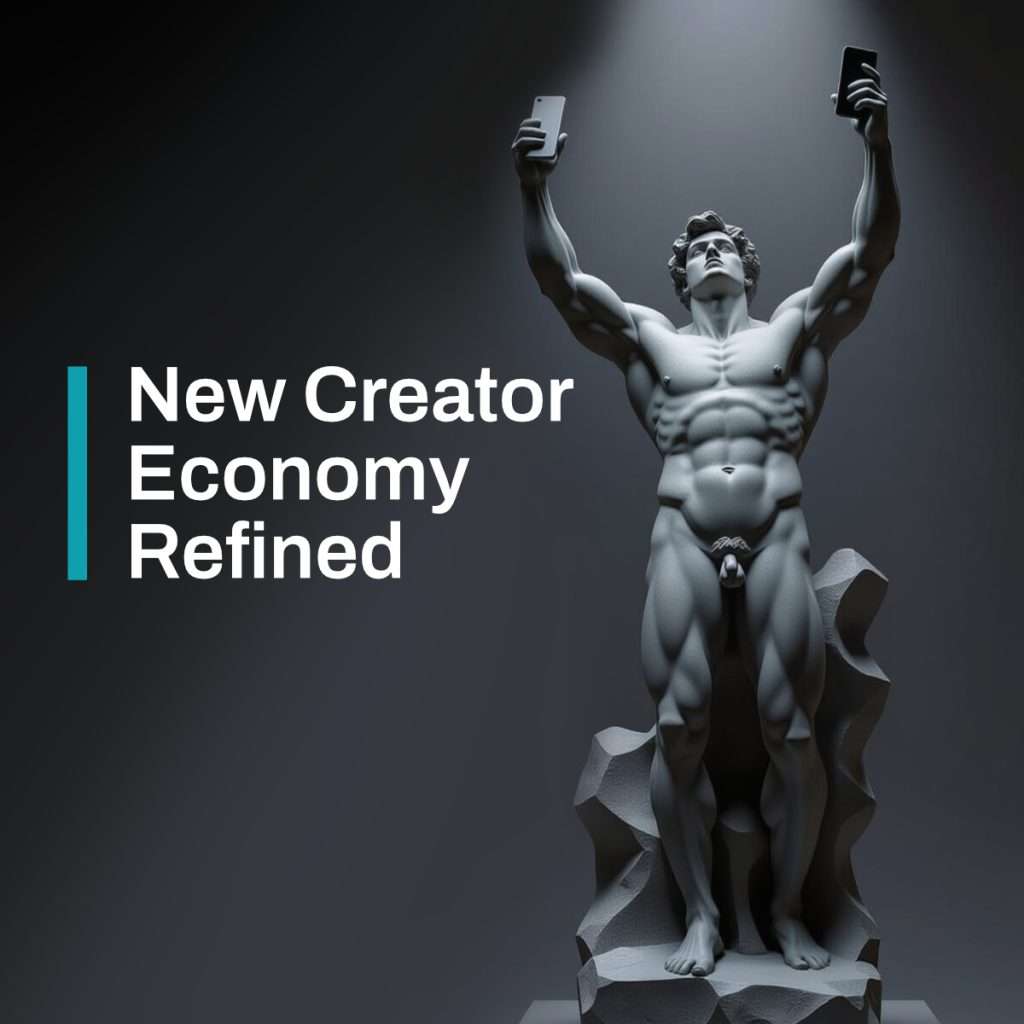
Since 2003, dedicated professional social media networks were largely viewed as digital résumé platforms — places where professionals maintained an online CV, searched for jobs, recruited talent, or established corporate credibility.
Networks such as LinkedIn became synonymous with recruitment, business etiquette, polished personal branding, and executive thought leadership rather than entertainment or creator-driven media.
1. From Pro Network to B2B Influencer
Today, professional social platforms increasingly function as media ecosystems where expertise itself has become content, influence, and ultimately monetizable intellectual property. The line between “professional” and “creator” has collapsed. Consultants, founders, marketers, educators, developers, analysts, designers, lawyers, and executives now operate like niche media companies — publishing insights, building audiences, and converting authority into revenue streams.
A Structured Expertise Ecosystem
According to SoftwareFolder Creator Economy 101 and related Creator OS frameworks, the creator economy is no longer limited to influencers chasing virality. It has evolved into a structured ecosystem of independent operators building leverage through expertise, systems, community, and owned digital assets.
The major professional social networks now include platforms such as LinkedIn, X (formerly Twitter), Substack, Medium, GitHub, Behance, Dribbble, ResearchGate, and increasingly business-oriented creator ecosystems such as DeepRed and creator operating environments like Creatora. Video-first platforms such as YouTube and podcast ecosystems like Spotify for Creators have also become critical professional influence channels.
What makes this shift significant is who is using these networks — and how.
Professionals are no longer merely networking; they are building distribution. A founder documents the process of building a startup. A marketer publishes breakdowns of campaign strategy. A designer shares workflows and creative systems. A software engineer teaches development practices. A consultant creates educational threads, newsletters, webinars, and short-form video explainers. In each case, expertise becomes discoverable content.
This has created a new class of “professional creators” — individuals who monetize trust, insight, and niche authority rather than celebrity. Their monetization models often include consulting, sponsorships, affiliate partnerships (examples), memberships, paid communities, digital products, workshops, SaaS tools, speaking engagements, licensing, recruitment opportunities, and fractional advisory roles.
As a result, professional social networking has shifted from:
- Static identity → dynamic authority
- Online résumé → ongoing publication
- Networking → audience building
- Employment visibility → business leverage
- Credentials → proof-of-work content
This evolution explains the unmistakable boom in B2B influencer marketing.
Historically, influencer marketing was associated with fashion, beauty, lifestyle, gaming, and consumer brands. B2B companies were slower to adopt creator-driven marketing because enterprise purchasing traditionally depended on whitepapers, sales teams, conferences, and institutional advertising.
That model is rapidly changing.
This move has been encouraged by B2B partnership networks such as Partnerstack, Impact, and other similar platforms that help bring brands and creators together.
Decision-makers increasingly trust individuals more than corporate messaging. Buyers now consume educational content before interacting with sales departments. This has elevated niche professional creators into highly influential market actors.
Modern B2B influencer marketing is now being driven heavily through:
- LinkedIn thought leadership
- Educational YouTube channels
- Expert newsletters
- Podcasts
- Webinars
- Community-led growth
- Creator-hosted live events
- Professional creator partnerships
The emergence of specialized platforms such as Toksta and Favikon demonstrates how mature the sector has become. These platforms are specifically designed to help companies identify, vet, manage, and measure professional creators and B2B influence campaigns.
Unlike traditional influencer marketing focused on vanity metrics, B2B creator influence is increasingly tied to trust, expertise, niche relevance, audience quality, conversion potential, sales attribution, and long-term authority.
The creator economy itself is also maturing. The most important transformation is that creators are no longer treated simply as advertisers or media inventory — they are becoming businesses. Industry conversations among founders, marketers, and platform executives currently hinge on five major shifts reshaping how professional influence is built and monetized.
Researched and compiled by software-folder.com & clicknurturing.com
2. Creator Economy Reshaping
5 Major trends that reshape how influence is built and monetized
Across every trend — from engineered authenticity to contractual auditions — one overarching theme emerges: on today’s professional networks, influence is no longer just about personality.
Success is transitioning away from raw charisma and toward data-led workflows, long-term brand co-creation, and original niche authority. The creators and brands that win in this new era will not be the loudest. They will be the most systematic, the most original, and the most committed to treating partnerships as long-term relationships rather than short-term transactions..

1. Engineered Authenticity
Authenticity is no longer entirely spontaneous. Creators are increasingly designing content strategies that feel personal while being highly intentional and performance-driven.
Audiences still value relatability and transparency, but successful creators now combine those qualities with audience analytics, storytelling frameworks, and behavioural insights. What appears casual is often strategically structured for retention, engagement, and conversion.
This trend is reshaping influence by rewarding creators who can balance genuine communication with platform-native optimisation.
2. Data-Led Creator Operations
The modern creator economy is becoming operationally sophisticated. High-performing creators are functioning more like media companies than independent personalities.
Analytics dashboards, audience segmentation, SEO strategy, content repurposing systems, AI-assisted workflows, and automation tools are increasingly central to growth. Decision-making is shifting away from intuition alone and toward measurable performance indicators.
As a result, monetisation is becoming more predictable, scalable, and less dependent on viral moments.
3. Long-Term Brand Co-Creation
Brands are moving away from one-off sponsorships and toward deeper creator partnerships built on continuity and shared identity.
Rather than paying simply for exposure, companies increasingly want creators involved in product positioning, campaign development, audience research, community engagement, and even product creation itself.
This shift transforms creators from temporary advertisers into strategic brand collaborators with recurring revenue opportunities and stronger commercial leverage.
4. Original Niche Authority
Broad appeal is becoming less valuable than trusted expertise within a specific niche.
Audiences are gravitating toward creators who consistently provide specialised insight, whether in technology, business, design, education, finance, wellness, or emerging digital culture. In many cases, smaller niche creators are outperforming larger generalist influencers in conversion and audience trust.
This trend is accelerating the rise of “micro-authority,” where influence is built through depth of knowledge, consistency, and community credibility rather than follower volume alone.
5. Contractual Auditions and Performance-Based Partnerships
Brands increasingly expect creators to prove commercial effectiveness before entering larger agreements.
Short-term pilot campaigns, affiliate-led collaborations, trial partnerships, and performance benchmarks are becoming standard practice. In effect, creators are continuously participating in contractual auditions where measurable outcomes determine long-term opportunities.
This evolution is pushing the industry toward accountability, clearer ROI expectations, and stronger emphasis on audience quality over vanity metrics.
In this emerging landscape, influence is evolving into a hybrid discipline that combines creativity, systems thinking, audience intelligence, and strategic relationship building.
The creator economy is no longer defined solely by visibility; it is increasingly defined by sustainability, operational maturity, and the ability to convert trust into long-term value.
permanence
The New Creator Economy
In a fast-paced environment dominated by algorithms, short-form trends, and constant content turnover, permanence becomes a competitive advantage.
While much of today’s digital ecosystem rewards immediacy and rapid engagement, long-term value is increasingly created by assets that remain discoverable, searchable, referenceable, and useful over time.

Researched and compiled by software-folder.com & clicknurturing.com
3.The New Creator Economy —Permanence
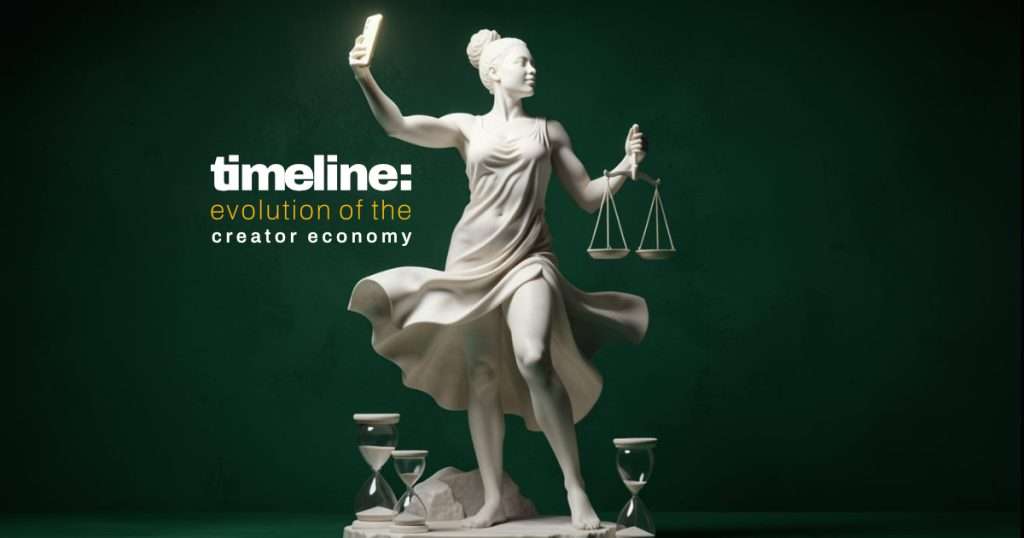
For creators, brands, and businesses, permanence means investing in infrastructure rather than only moments of attention. This includes owned platforms such as websites, newsletters, knowledge hubs, digital products, archives, communities, and evergreen educational content that continue generating visibility and trust long after publication.
For creators, brands, and businesses, permanence means investing in infrastructure rather than only moments of attention. This includes owned platforms such as websites, newsletters, knowledge hubs, digital products, archives, communities, and evergreen educational content that continue generating visibility and trust long after publication.
The importance of permanence is growing for several reasons:
- Social platforms are increasingly unstable, with algorithm changes capable of dramatically reducing reach overnight.
- Audiences are becoming fatigued by disposable content and are placing greater value on depth, credibility, and consistency.
- Search behaviour is shifting toward intent-driven discovery, where authoritative and enduring content often outperforms trend-driven publishing.
- AI systems increasingly reward structured, referenceable, and semantically clear information sources when surfacing recommendations and answers.
In practical terms, permanence transforms content from a temporary campaign into a compounding digital asset.
A short-lived social post may generate engagement for 24 hours. A well-structured article, educational resource, branded framework, or searchable media library can generate authority, leads, backlinks, and revenue for years.
This does not mean abandoning real-time content or cultural participation. Instead, it means balancing velocity with durability.
The most resilient modern media brands are increasingly operating with a dual-content model:
- Fast content for attention and relevance.
- Permanent content for authority, discoverability, and long-term monetisation.
From a business perspective, permanence also strengthens independence. The more a creator or organisation owns its audience relationships, archives, intellectual property, and distribution channels, the less vulnerable it becomes to platform dependency.
In the next phase of the creator economy, permanence is likely to become one of the defining characteristics separating sustainable media businesses from those built entirely on fleeting visibility.

The New Creator Economy—Who Owns It?
What is the infrastructure play?
The infrastructure play refers to the systems powering the creator economy — platforms, payment processors, AI tools, analytics, hosting, newsletters, and monetisation networks. While creators generate the content, infrastructure companies often control distribution, discovery, and revenue flow.
This is why ownership matters. Creators who build audiences on platforms alone are participating in the system, while those who develop owned assets — websites, email lists, communities, products, and intellectual property — are building equity within it.
How creators leverage this infrastructure play?
Creators are increasingly operating like digital businesses rather than simply online personalities. They are using AI tools, automation, SEO, newsletters, and community platforms to build direct audience relationships and scalable revenue streams.
Many are shifting toward evergreen content, niche authority, memberships, digital products, and owned media ecosystems that continue generating value beyond algorithm-driven visibility.
In this evolving landscape, attention is temporary, but infrastructure compounds. The creators who understand this distinction are positioning themselves for greater independence, resilience, and long-term monetisation.
RELATED CONTENT & RESOURCE